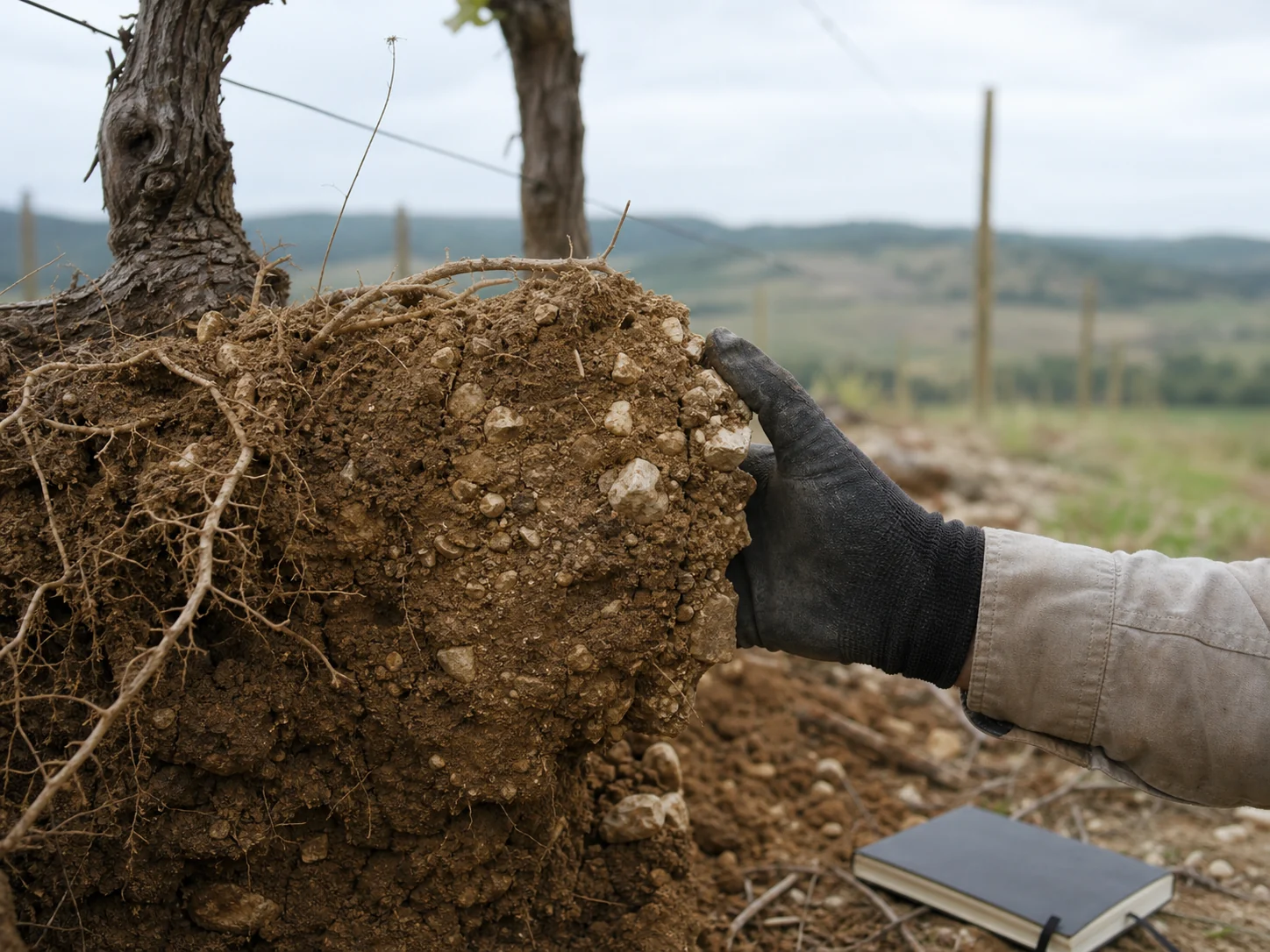
Every autumn, before we think about harvest or blending, we dig. A spade goes into the vineyard floor, and we read the layers of our land like a chapter from geology.
The first six inches are alive — decomposing leaf matter, mycorrhizal networks, earthworms doing the work we couldn't do with any machine. Below that, the mineral world takes over. Clay ribbons alternate with fractured volcanic rock in our estate block. In the hillside Syrah parcel, we hit decomposed sandstone at eighteen inches, which forces the vine roots to descend, reaching for moisture that doesn't exist near the surface.
This is not an accident. It's the point.
Vine stress — the right kind, water stress, not heat stress or nutrient deficiency — forces the vine to concentrate its energy in the clusters. Small berries, thick skins, intense flavor. The vine isn't lazy. It's focused.
What we find in the soil profile each year shifts slightly with the weather. After the 2021 drought, the clay layers in the estate block tightened and cracked. The roots that had previously spread laterally were forced to grow downward. The 2021 Reserve Cabernet carries this story: more structure, more mineral tension than previous vintages. You can taste the drought. In the best possible way.
Soil analysis tells us the chemistry — pH, calcium, magnesium, iron. But the spade tells us the texture, the drainage, the depth. It tells us where the roots want to go. We listen, and we adjust. This is what estate farming means to us: not fighting the land, but reading it.