Fictional brand narrative — Sample Geneva setting
The Maison
An illustrative heritage story, built to be replaced.
CALIBRE has no real manufacture or lineage. This fictional narrative demonstrates how a watchmaker can connect place, craft, continuity, and service while keeping the actual history, evidence, and provenance ready for a real brand to supply.
Illustrative chronology
Every date, person, milestone, award, and production figure below is fictional sample content.
- 1887
The Founding
Albert Moreau — a lone watchmaker of twenty-three — establishes a one-room atelier on the Rue de la Corraterie. His tools: four files, two pairs of tweezers, a turn, and an absolute conviction that the lever escapement had not yet been made as well as it could be. His first pocket watch movement is completed after fourteen months of work. It keeps time to within eight seconds a week.
- 1923
First In-House Calibre
The CLB-001 marks CALIBRE's first wholly proprietary movement — designed, machined, and assembled within a single building. It features a self-correcting remontoir mechanism that delivers constant force to the escapement, eliminating the variation caused by the mainspring's declining tension. The movement wins the Prix d'Observatoire de Genève. We are twenty-three watchmakers.
- 1957
The Tourbillon Era
Third-generation master Henri Moreau introduces CALIBRE's first flying tourbillon — a complication that suspends the escapement and balance wheel in a rotating cage, averaging out the gravitational errors introduced by the watch's changing orientation. At the time, fewer than a dozen manufacturers in the world possessed the skill to produce one. Henri trains the technique from scratch, inventing two proprietary tools in the process.
- 1985
Perpetual Calendar
The Quantième Perpétuel — CALIBRE's perpetual calendar complication — is released in a limited series of forty-eight pieces. A perpetual calendar tracks the length of every month across the year, including the leap-year cycle, without requiring manual correction until the year 2100. Our mechanism fits within a 4.2mm module, a record for its era. Thirty-one of those original forty-eight pieces are still in daily use.
- 2009
Modern Manufacture
The opening of our CNC machining centre does not replace our watchmakers — it frees them. Components that once required three days of hand-turning on a traditional lathe now emerge from the CNC in three hours, at tolerances no human hand can match. Our craftspeople then spend that freed time on what machines cannot do: finishing, regulating, and the final adjustments that determine whether a movement is good or great.
- 2024
CALIBRE Today
One hundred and thirty-seven years after Albert Moreau's first pocket watch, CALIBRE occupies four buildings in the Plan-les-Ouates district. Thirty-two master watchmakers. Six apprentices accepted annually from the Geneva watchmaking school. Annual production: fewer than five hundred movements. Each movement signed. Each piece accompanied by a certificate of rate, bearing the initials of the watchmaker who regulated it.
Sample atelier model
The Workshop
Our atelier operates on a principle of singular accountability. A movement is assigned to one watchmaker at the beginning of assembly. That watchmaker — and no other — completes every stage of construction, from the fitting of the first jewel to the final rating of the regulation. When the movement leaves their bench, they sign their initials on the inside of the caseback with a steel scribe.
This is not efficiency. Thirty-two watchmakers, working in this fashion, produce fewer movements in a year than a single automated line could produce in a week. We are not competing with automation. We are making an argument against it.
The six stages of assembly — rough movement assembly, escapement fitting, motion works and calendar setting, case assembly, water resistance testing, and final timing — are each performed by the same pair of hands. The watchmaker who fits the escapement is the same watchmaker who times the finished piece in five positions.
32
Master Watchmakers
6
Stages of Assembly
500
Movements Per Year, Maximum
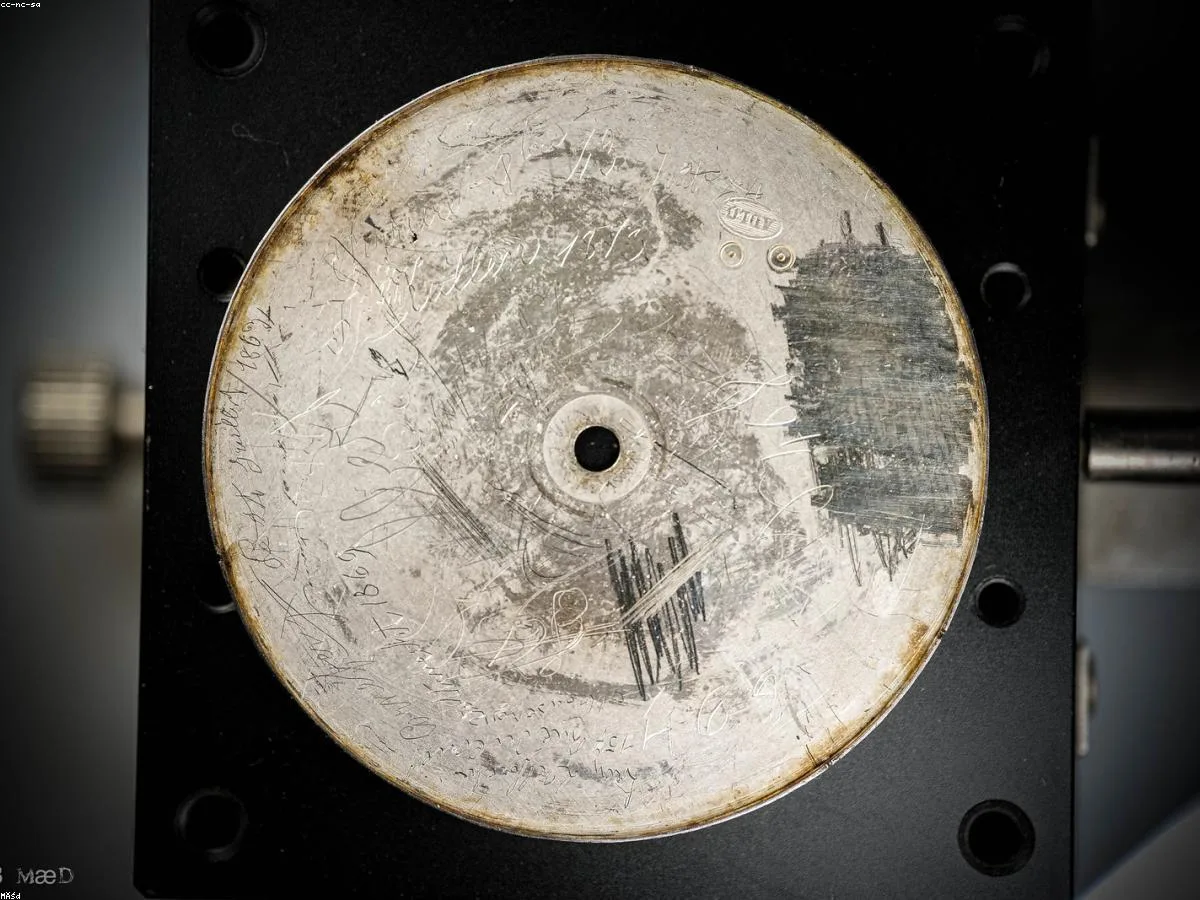
Illustrative workshop photography — no CALIBRE facility or staff
Each dot represents one master watchmaker. One movement. One signature.
Philosophy
We do not make watches.
We capture time.
A mechanical watch does not measure time in the way a quartz oscillator does — with the indifferent regularity of a crystal. A mechanical watch negotiates with time. The mainspring releases energy according to the friction of its lubricants, the temperature of the air, the position of the wearer's wrist. The watchmaker's art lies in tightening that negotiation to a near-perfect agreement.
We believe that the value of a mechanical watch is inseparable from the human knowledge contained within it. The grinding of a wheel. The angle of a bevel. The feel of a hairspring between thumb and forefinger. These are forms of knowledge that cannot be written down. They exist only in the hands of the craftspeople who carry them, and they are passed on only through proximity and time.
To own a CALIBRE is not, therefore, merely to acquire a timepiece. It is to take custody of a piece of that knowledge — to carry, on your wrist, the evidence of what a human being can do with enough skill, enough patience, and enough time.
The Collections
Five Disciplines of Time
Tourbillon
Tourbillon Perpetuel
Chronograph
Chrono Rattrapante
Dress
Dress Perpetuel
Sport
Sport GMT
Heritage
Heritage Remontoir
Our Commitments
Three Pillars
Rated to ±2 Seconds Per Day
Precision
Every movement produced at CALIBRE is tested across five positions — three vertical, two horizontal — for a minimum of sixteen days before casing. The rate certificate accompanying each watch bears the actual measured deviation: not a specification range, but the real number from your specific movement.
“Precision is not a standard. It is a practice.”
Six Generations of Manufacture
Heritage
Every technique employed in our atelier has been practiced continuously since our founding. We do not revive lost arts. We have never stopped using them. The Côtes de Genève on our bridges is applied identically to the manner it was applied in 1887 — by hand, on a rotating zinc wheel, one stroke at a time.
“Continuity is the rarest luxury.”
500 Pieces Per Reference, Annually
Rarity
We limit production not as a marketing exercise but as a physical necessity. The number of movements our watchmakers can produce to our standard is finite. We do not expand production by lowering standards. We accept that this makes CALIBRE inaccessible to most — and we believe that is correct.
“What is rare is not always valuable. What is valuable is always rare.”
Begin with the Collection
Each watch in the CALIBRE catalogue is a complete expression of our philosophy. Choose the complication that speaks to you.