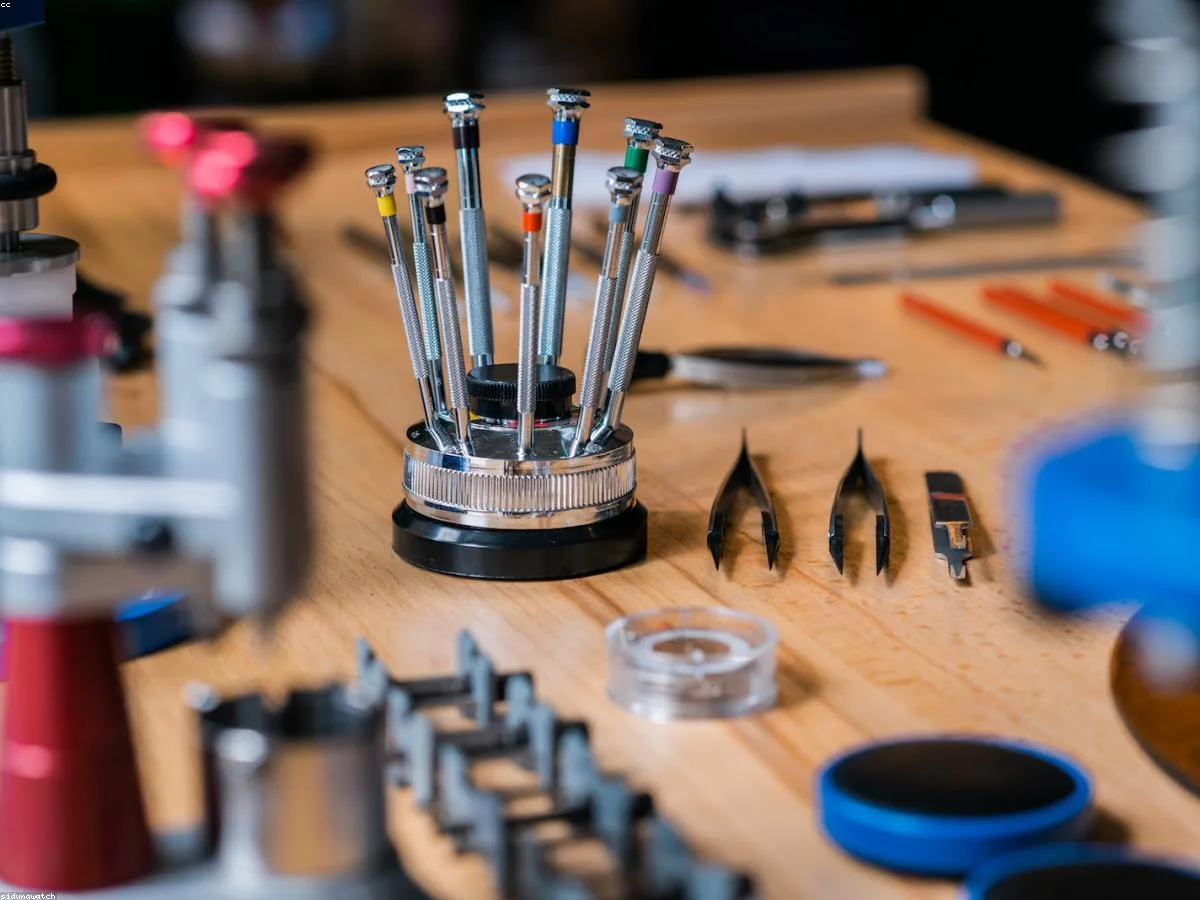
In-House Calibre Manufacture
The Movement
312 components. One purpose.
Within our atelier in Geneva, a single movement undergoes six months of uninterrupted attention before it leaves our hands. Every wheel is cut to tolerances measured in micrometres. Every surface is finished by hand to a standard that a machine cannot replicate. This is not manufacturing. This is devotion.
Manufacture Calibre
The Art of Assembly
Scroll to explore the fictional movement concept component by component.
Parts will highlight as you scroll through the sequence.
Components
312
Jewels
45
Frequency
4 Hz
Power Reserve
72 h
Scroll
01 — The Escapement
Where Energy Becomes Rhythm
The lever escapement is the mechanical heart of horology — the mechanism that divides the continuous release of mainspring energy into discrete, countable beats. At CALIBRE, our escapement is hand-finished to a standard that exceeds chronometric specification.
Each pallet fork is individually fitted and tested in the assembled movement. The impulse faces are mirror-polished to reduce friction to a theoretical minimum. Our watchmakers spend upward of four hours on the escapement alone — before the movement is wound for the first time.
The result: an escape wheel that completes one rotation every sixty seconds, its fifteen teeth hand-beveled under a loupe, each facet angled to reflect the same stripe of light.
4+ hours of hand-finishing per escapement assembly.
02 — The Balance Wheel
The Beating Heart
At 28,800 alternations per hour — eight beats per second — our balance wheel oscillates with the metrical constancy of a heartbeat. It is the most human element in a mechanical movement: variable, sensitive, alive.
Our balance wheel is crafted from a proprietary glucydur alloy that resists magnetic fields and thermal variation. Eighteen gold regulation screws allow our watchmakers to fine-tune the rate across five positions — dial up, dial down, crown left, crown right, crown up — achieving a positional variance of less than ±2 seconds per day.
The hairspring is hand-shaped. Its terminal curve — the outermost coil, which must open concentrically — is adjusted with a watchmaker's peg until it breathes in perfect circles. This adjustment alone can take an afternoon.
03 — Surface Finishing
The Art of Light
A movement bridge reveals its quality in how it reflects light. Our bridges receive Côtes de Genève — the parallel striping pattern that has defined fine watchmaking since the nineteenth century — applied by hand on a rotating lapidary wheel, each stroke parallel to the last within a tolerance of a fraction of a millimetre.
Beneath the bridges, the base plate receives perlage: overlapping circular polishing applied with a rotating peg loaded with abrasive paste. Each circle is deliberately placed to create a uniform texture that catches and scatters light. A full base plate can require several hundred individual applications.
All angles — the sharp corners where surfaces meet — receive anglage: beveling followed by high-polish finishing. A skilled finisher will spend a full day beveling a single large bridge, drawing a sharpened steel tool along each edge until it glows.
“Light does not lie. A poorly finished surface cannot hide.”
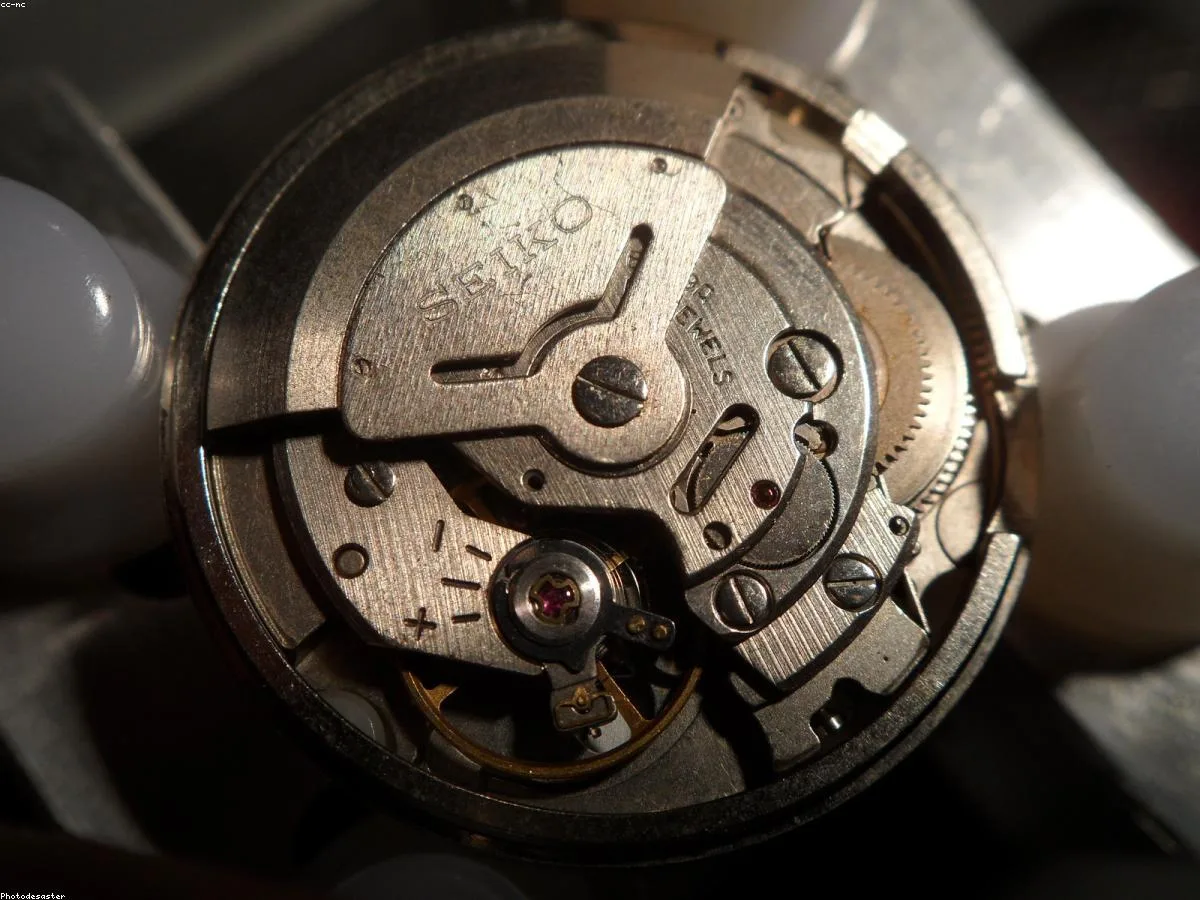
Côtes de Genève
Perlage
Anglage
By the Numbers
Illustrative figures show how a maker can communicate precision; CALIBRE produces no movements.
500+
sample hours
illustrative production time
0.001
sample mm
illustrative tolerance
21
sample jewels
illustrative movement count
5
sample positions
illustrative testing model
Every movement we produce carries the hands of the watchmaker who finished it. Not metaphorically — literally. The oils, the adjustments, the infinitesimal decisions made at the bench. That is why we sign each movement.
— Fictional CALIBRE brand voice