The asset
What the darkness is actually worth
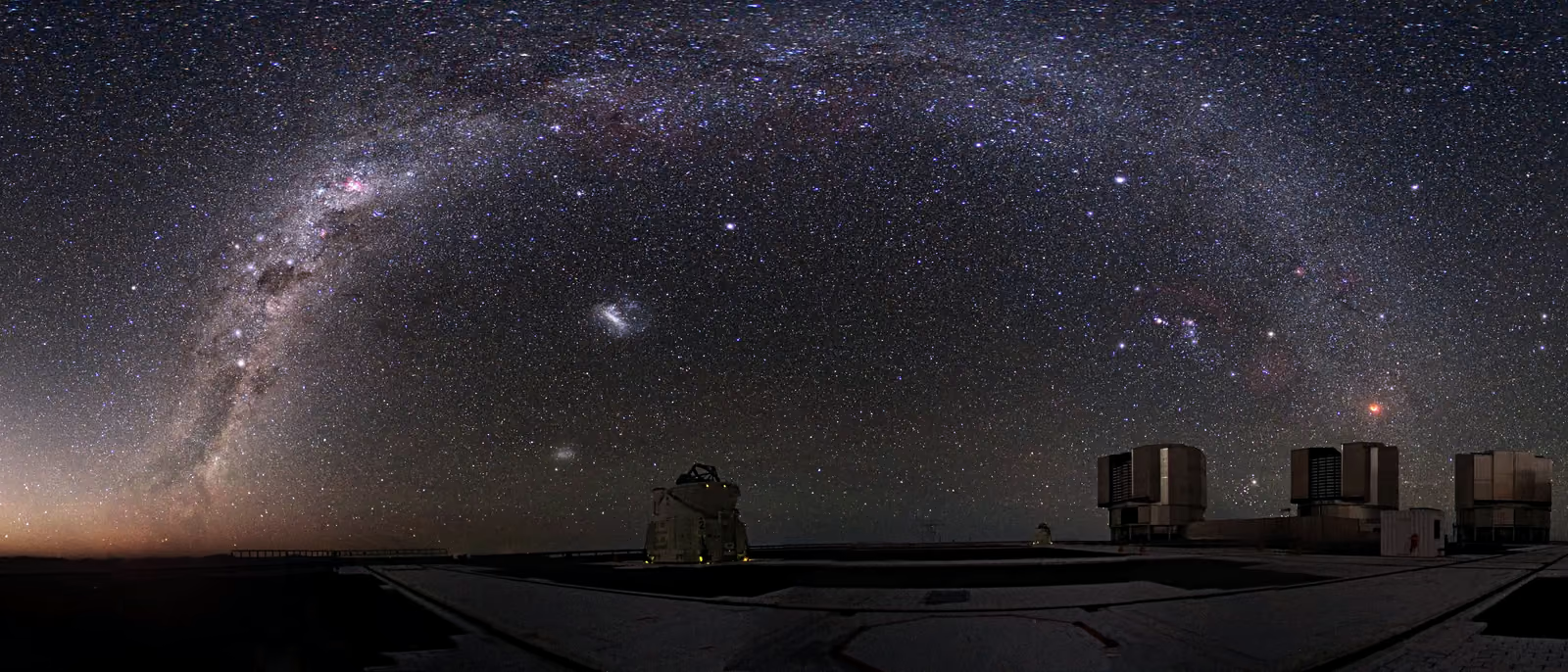
Every observatory says its sky is dark. This is the measurement, the method, and the week each year when the sky here is genuinely useless.
- Bortle class
- 1
- Median SQM
- 21.91
- Worst month
- 20.55
- Elevation
- 2,480 m
Four years of readings
Sky-quality meter readings at the zenith, taken at astronomical dark with the moon below the horizon. Higher is darker, and each whole magnitude is a factor of about 2.5 in sky brightness. An inner suburb reads about 18.5; a good rural site about 21.2.
The week it does not work
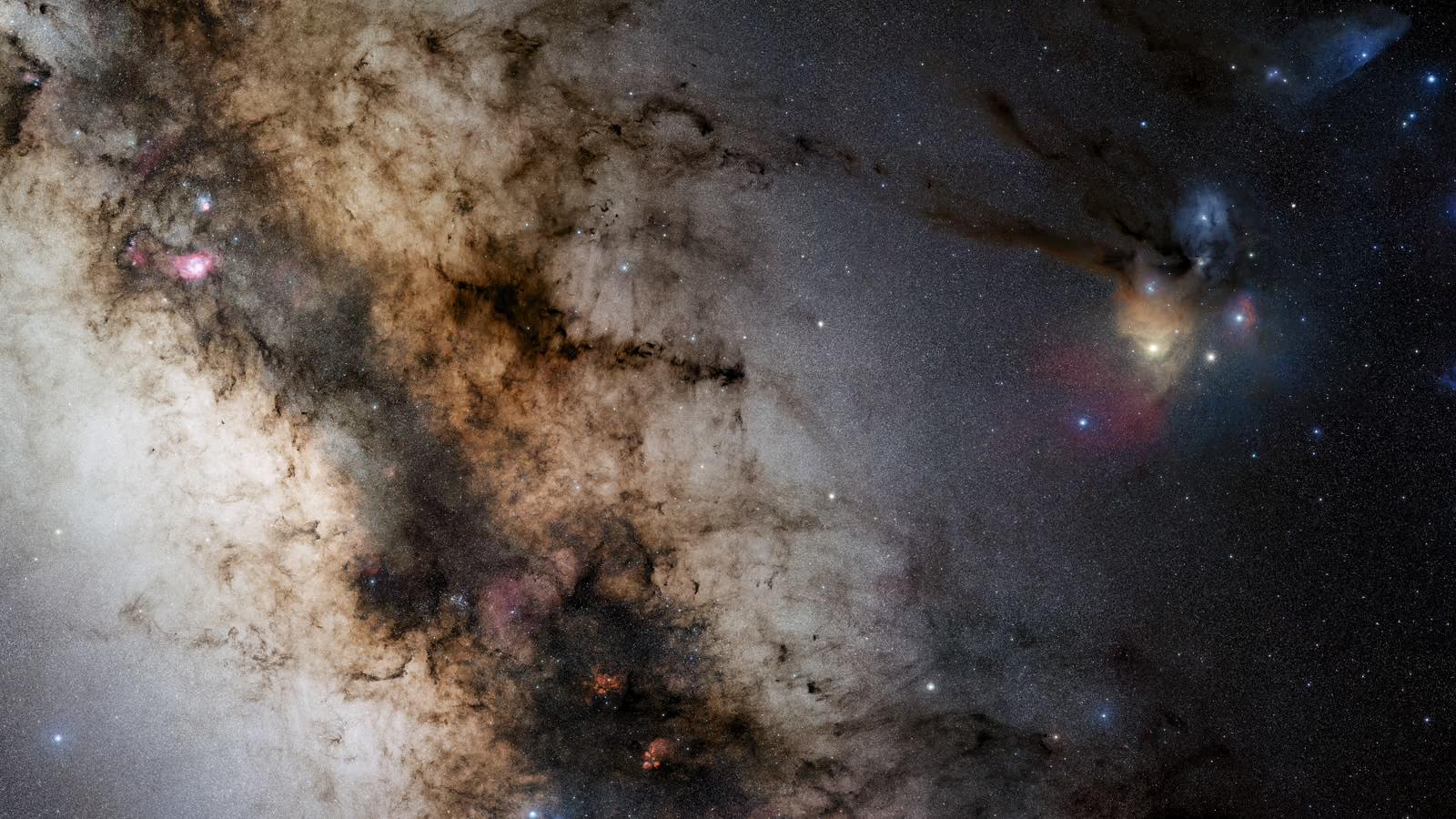
Every February the plateau gets high-altitude dust from the north, and for about a week the sky is unusable. Transparency drops to 1 on our five-point scale and the zenith reading falls by roughly a magnitude and a half — entirely from suspended dust, with no moon and no cloud involved.
That is the dip in the chart above, and it repeats in all four years. All deep-sky bookings in that window get rescheduled. We would rather show you the dip than average it away.
Why the road is unlit
There is no fixed lighting on this site: no security floods, no illuminated signage, no lit path. The last eleven kilometres of road are unlit as well, which took two years to negotiate with the regional authority.
A single unshielded light within a few kilometres would undo most of what the elevation and the distance buy us. The rule about phone screens after dusk comes from the same arithmetic.
How the numbers on this site are computed
Every altitude, phase, dusk time and dark-hour count on this website is computed, not tabulated. Positions come from Meeus, Astronomical Algorithms: sidereal time from equation 12.4, the horizontal transform from 13.5 and 13.6, refraction from Saemundsson’s formula, the sun from chapter 25, and the moon from a truncated form of the ELP series in chapter 47.
The lunar series is cut to twenty periodic terms, which is good to roughly ten arc minutes in longitude and a hundredth in illuminated fraction. That is far below anything that would change whether a night is bookable.
Precession is not applied. Star positions are J2000 mean places, and over the range the sky view covers, precession reaches about two arc minutes — below the resolution the catalogue is stored at. Applying it would change nothing visible; not saying so would be the actual defect.
Dark hours are counted by sampling every five minutes from 16:00 to 08:00 site local and counting the intervals where the sun is below −18° and the moon is below the horizon at the same time.
The star catalogue
- Source
- Yale Bright Star Catalogue, 5th revised ed.
- Via
- VizieR V/50
- Stars shipped
- 9,096
- Magnitude range
- -1.46 to 7.96
- File size
- 53.3 KB
- Worst position error
- 9.88″ RA, 4.94″ Dec
- Accessed
- 2026-09-09
The catalogue is rebuilt from source by a script in this project, so the file can be regenerated and diffed rather than taken on trust. Coordinates used throughout: -24.6272°, -70.4042°.