How a screw turns blue
Flame-bluing by eye, one screw at a time.
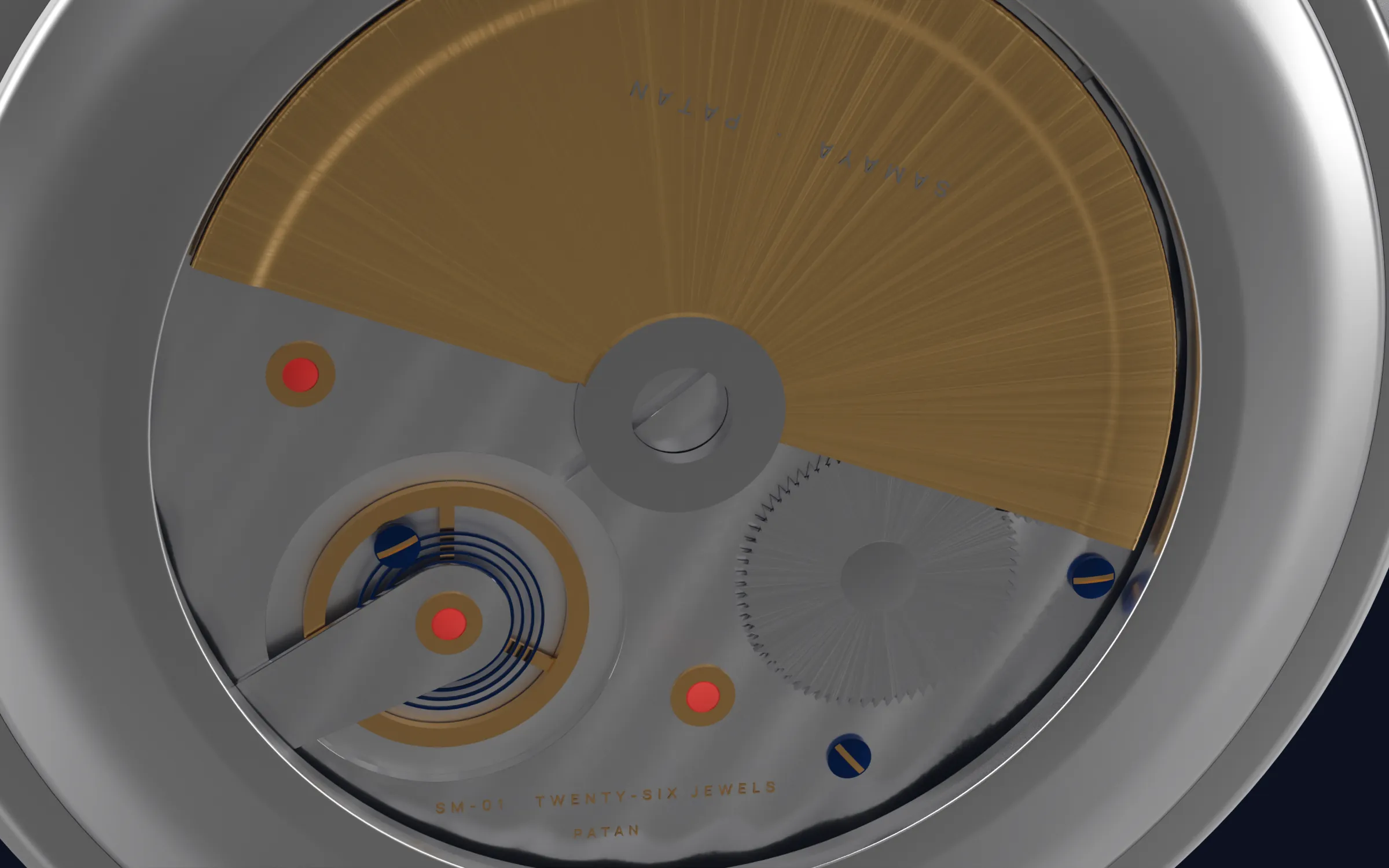
Look through the sapphire caseback of a Reference 01 and you will find a few screws that are not steel-grey but a deep, even blue. Nobody painted them. The colour comes from heat, and from a watchmaker deciding, within a second or two, when to stop.
Polish first
Bluing hides nothing. Every scratch on a screw head shows through the colour, so each head is polished flat and bright before it goes near a flame. Then it is cleaned of every trace of oil and every fingerprint, because grease left on the steel spoils the colour and leaves it blotchy.
A brass tray and a spirit lamp
The screw sits on a bed of brass filings in a small brass tray. Brass spreads the heat, so the screw warms evenly instead of from one hot spot. The tray goes over a spirit lamp and is kept moving in small circles.
As the steel warms, a film of oxide grows on its surface, thinner than a wavelength of light. Light reflected from the top and the bottom of that film interferes, and the colour you see depends on how thick the film has grown, which depends on the temperature. So the colours always arrive in the same order: pale straw at about 230 °C, then brown, then purple, and blue at around 290 to 300 °C.
There is no thermometer in the tray. The watchmaker watches the colour and tips the screw out the moment it reaches the right blue. It cools almost at once and keeps that colour. Leave it a few seconds longer and the blue fades to a pale grey-blue; take it off too soon and it stays purple.
Why blue
The heat does more than colour the screw. Hardened steel is strong but brittle, and the same heat tempers it, trading a little hardness for toughness, so the head will not crack under a screwdriver. The blue is visible proof that the steel reached the right temperature.
It also looks right. Against the striped bridges and gilt rotor of the SM-01, the blue is the one cool note, and it is the blue we matched our midnight fumé dial to.
One at a time
Screws can be blued in batches, and plenty of fine watches are made that way. We blue ours one at a time, by eye, because then the colour of each screw is a decision someone made. If one comes out patchy, it goes back to be polished and blued again.