Where every Reference 01 is made.
A small team, two streets from Patan's metalworkers, making about forty watches a year. Every one is turned, finished, assembled and regulated here, and signed inside the case by the person who closed it.

Off Durbar Square, behind a red door with painted eyes.
Patan sits across the Bagmati river from Kathmandu, one of the valley's three old royal cities. Its centre is Durbar Square: the old palace on one side, with carved courtyards like Sundari Chowk behind its walls, and temples of stone and timber on the other. Lanes lead off the square into courtyards where people have lived and worked for centuries.
Ours is three minutes on foot from the Krishna Mandir. The workshop is up one flight of stairs, above the courtyard, where the noise of the lane drops away.

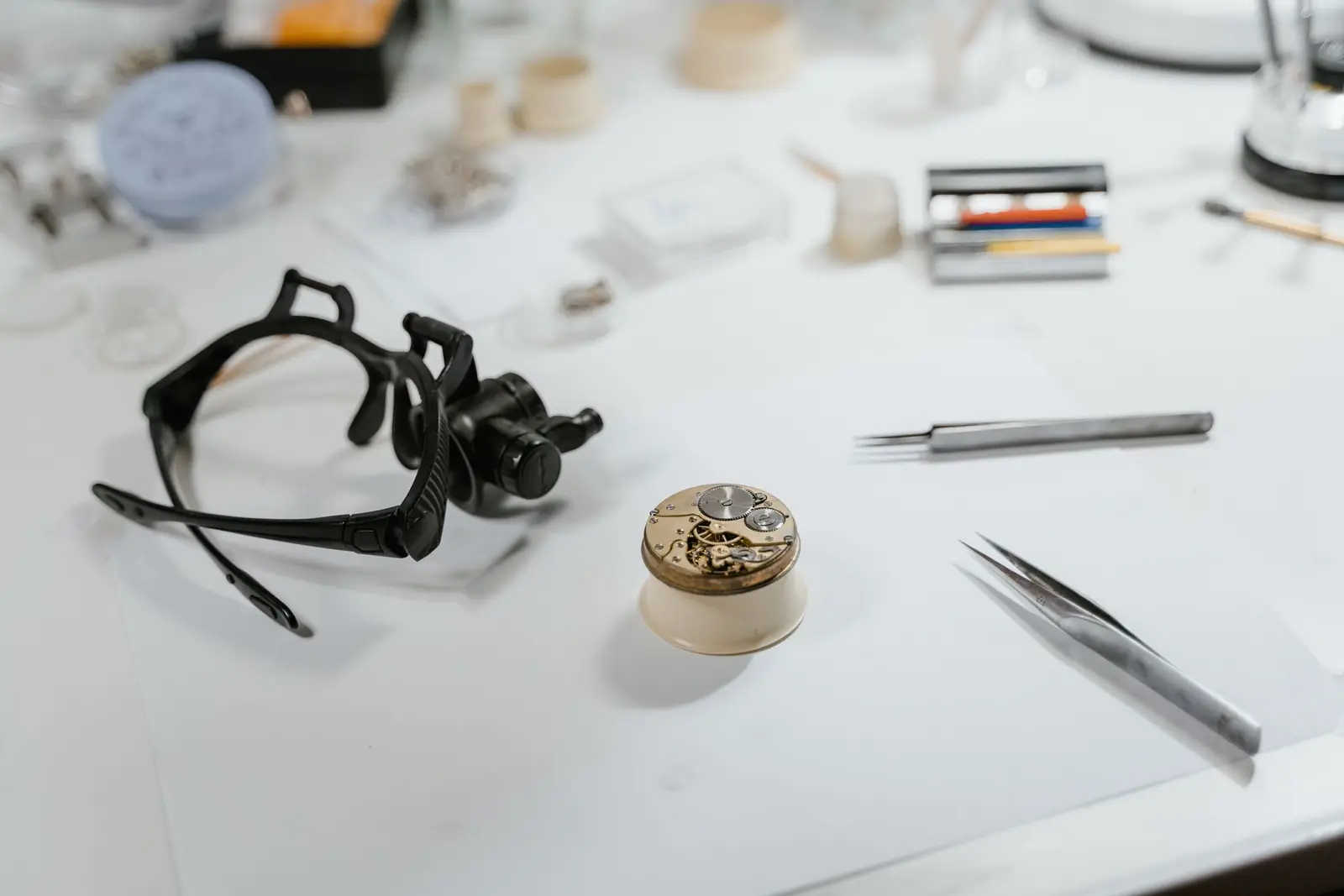
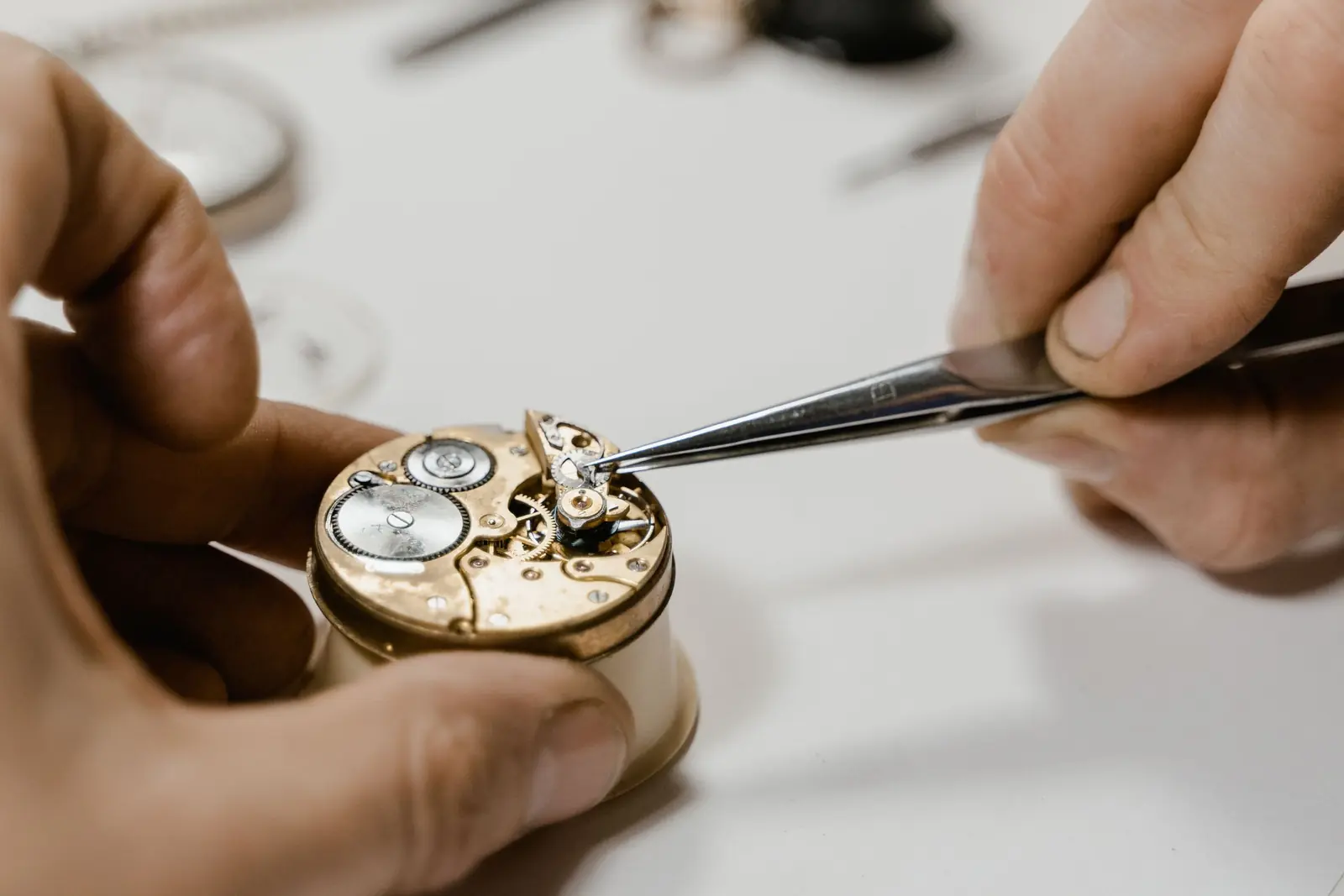
Six benches under north light.
The benches face north, where the light stays soft and even through the day. That matters when you are judging a polished edge, or a lacquer that changes with the angle.
Each bench has its own loupes, screwdrivers and tweezers, and a cover for the work in progress. Dust is the enemy, so movements are cased under a hood.
From block to wrist, in five stages.
About six weeks in all. The case and dial are made for your watch, so nothing waits on a shelf.
Turning
The case begins as a solid block of 316L steel or 18k gold. It is turned on a lathe to within a hundredth of a millimetre, then milled for the lugs and drilled for the six caseback screws.
Finishing
The flanks are brushed in one direction. The bezel and the chamfers along the lugs are polished by hand on a wheel, so the case catches light only where it should.
The dial
Each dial is brushed from the centre outward, then lacquered in thin layers so the fumé darkens toward the edge. The twelve indices are faceted and applied by hand.
Assembly
Under a dust hood, the SM-01 movement goes into the case, then the dial and the hands. The hands are set by eye and checked under a loupe, and whoever closes the case signs the inside of it.
Regulation
Each watch is regulated in five positions and timed on a machine. Then it spends six days on a winder and a week on someone's wrist before it is boxed with its timing certificate.
The people who make it.
Sunita Shakya
Case finishing
Brushes every case and polishes the bezel and lug chamfers by hand.
Rabin Bajracharya
Assembly and regulation
Cases the movement, sets the hands, regulates each watch in five positions and closes the case.
Manish Tamrakar
Dials
Brushes each dial from the centre outward and lays the lacquer on in layers.
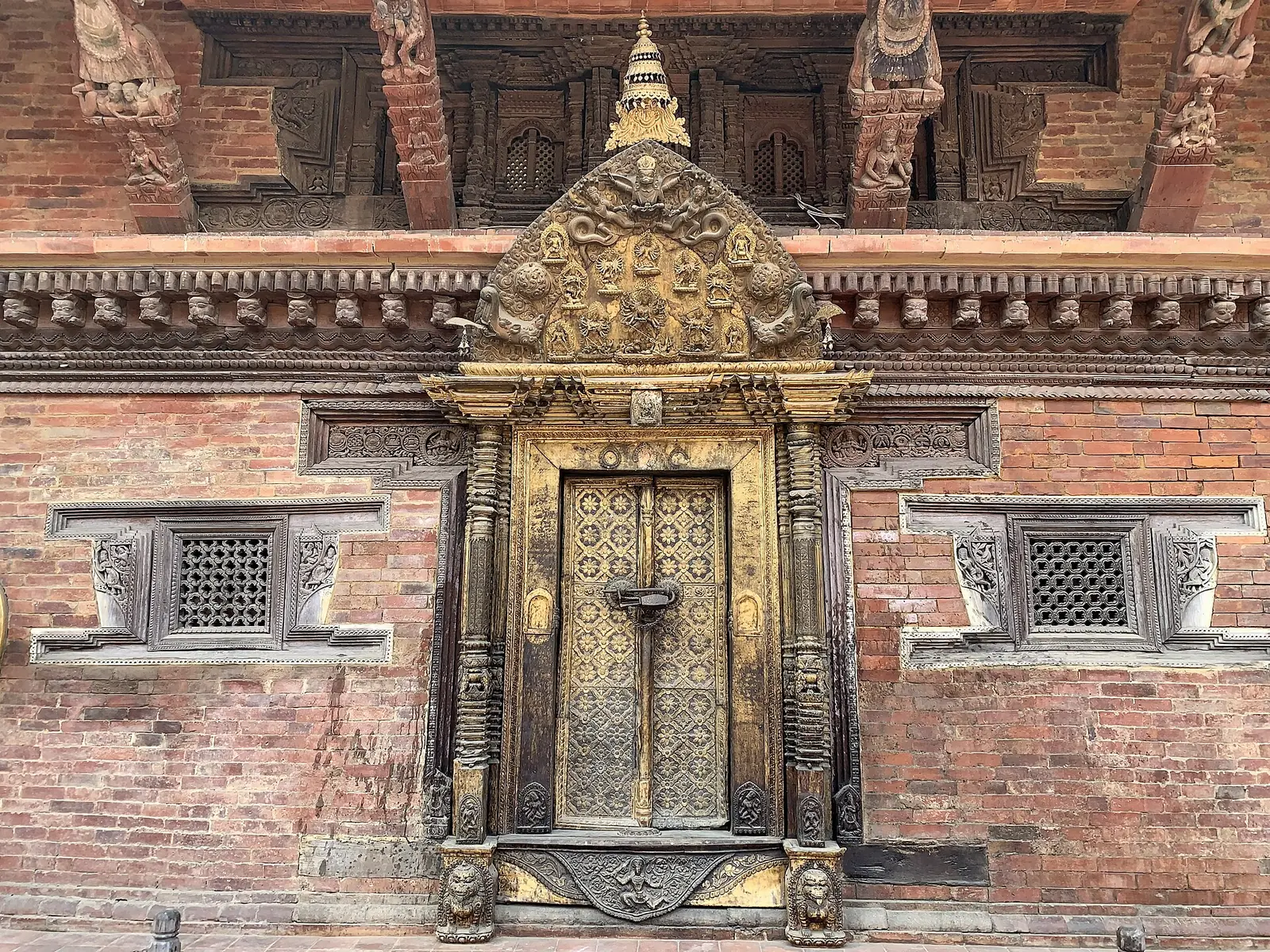
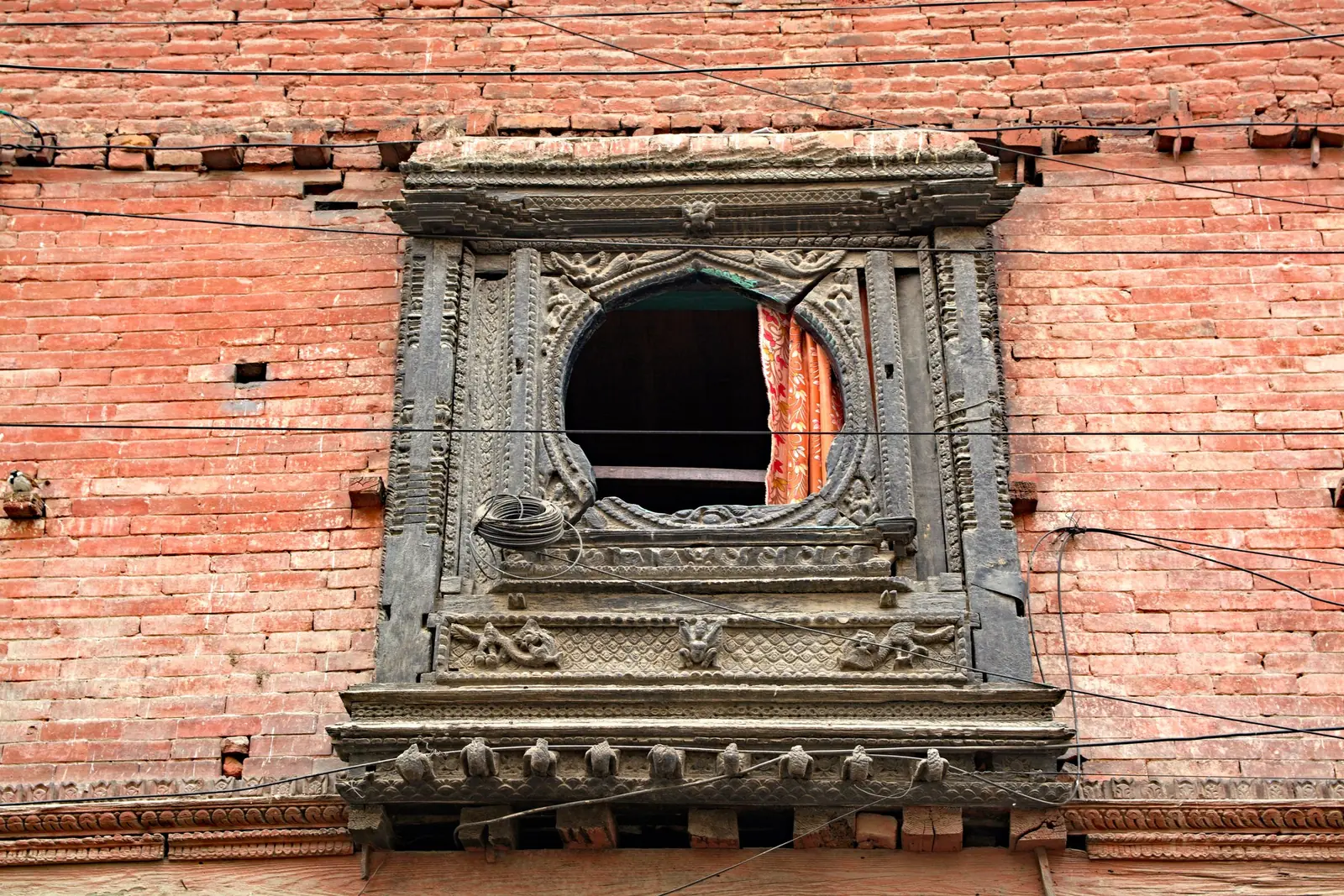
Two streets from the metalworkers.
Patan has been a city of metalworkers for centuries. Near our door, statues are still cast by the lost-wax method and sheet copper is hammered into relief, as it has been for generations. The carved windows of the old houses come from the same city's woodcarvers.
We cast nothing ourselves, but working beside them sets the standard for finishing. A statue is not done until every surface has been gone over by hand, and neither is a case.
We sign the inside of every case. Not for the owner, but for whoever opens it in fifty years.
Come and see the benches.
A visit takes about half an hour, Sunday to Friday. Every dial, both cases and all the straps are here to try on.