A morning with the metalworkers of Patan
Two streets from our door, one of the city's oldest crafts is still at work.
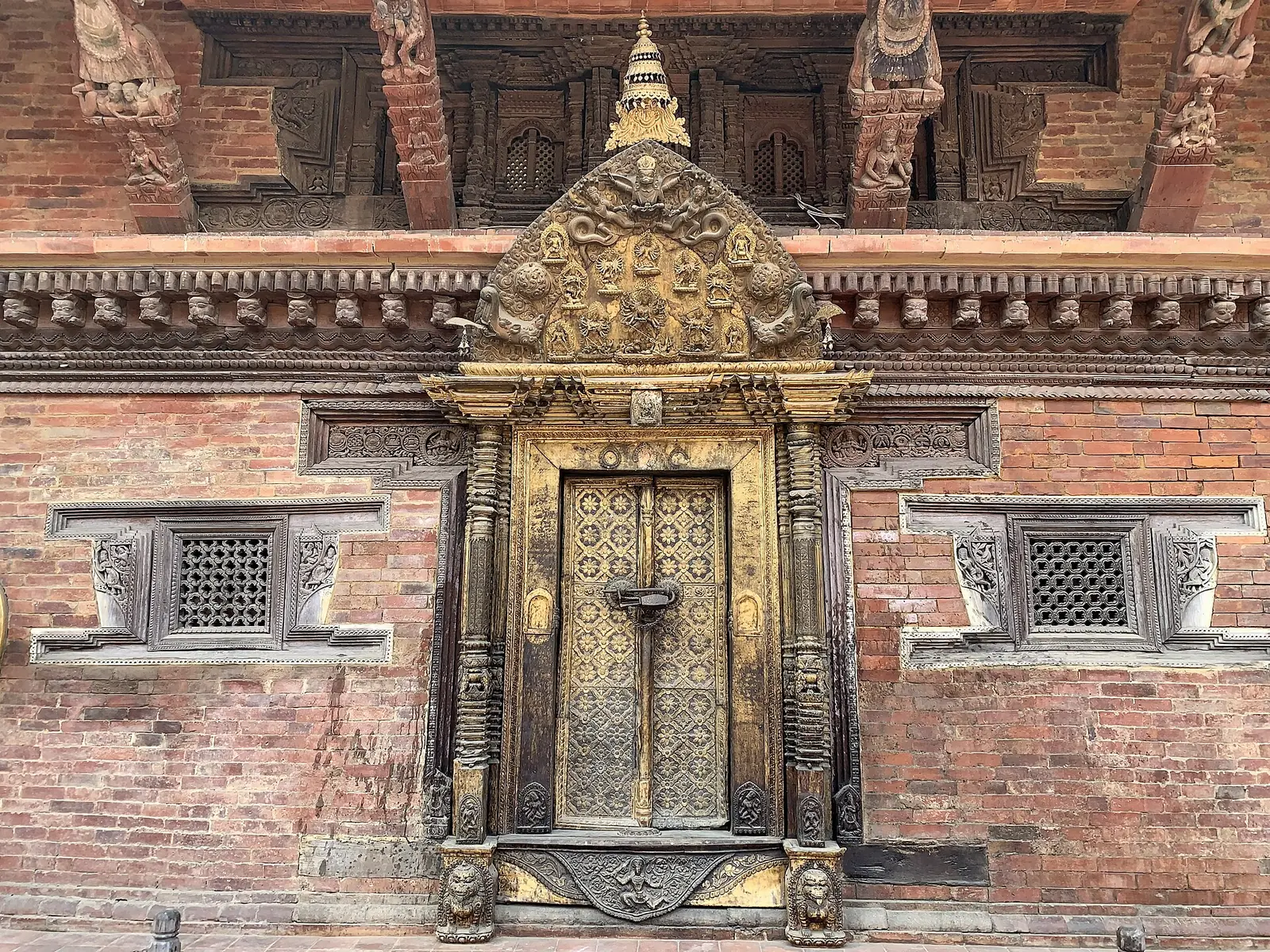
The Golden Door of Mul Chowk in the Patan palace, gilded copper worked in repoussé. Photograph: Chainwit., CC BY 4.0.
Two streets from the atelier, the working day starts with hammers. Patan has been a city of metalworkers for centuries, and in a few of its courtyards families have cast statues for generations. The valley's tradition of metal sculpture runs back well over a thousand years, without a break.
Lost wax
The statues Patan is known for are made by the lost-wax method. The figure is first modelled in wax, by hand, down to the fingers and the folds of cloth. The wax is coated in fine clay mixed with organic matter, layer on layer, and left to dry. When the mould is fired, the wax runs out, which is where the method gets its name, and molten metal is poured into the space it leaves. Once the metal has cooled, the mould is broken away, so every mould makes exactly one casting.
What comes out is rough. Then the finishing begins: the surface is chased and engraved with small steel tools until the face, the jewellery and every edge are crisp again. The old images are mostly cast in nearly pure copper and then gilded. Traditionally that meant a paste of gold and mercury, heated until the mercury is driven off, and the gold burnished to a shine. It is beautiful, and the fumes are dangerous for the people who do it.
Repoussé
In other workshops nearby, images are raised from sheet copper instead of cast. In repoussé the sheet is hammered from behind until the shape rises on the front, then worked from the front with chasing tools to sharpen the detail. Newar metalworkers have long been counted among the masters of the technique, and gilded copper of this kind decorates temple doorways and roofs across the valley.
What we take from it
We do not cast or emboss anything for Reference 01. But a morning in a casting yard is a lesson in what finished means. A statue is not done when it leaves the mould; it is done when someone has gone over every surface with a tool and a steady eye. That is the standard we try to hold our bezels and bevels to.
The metalworkers also keep us supplied with things you cannot order online: a graver re-ground to an odd angle, a brass tray for bluing screws, a small tool made to fit one job. When we need one, we walk two streets and ask.