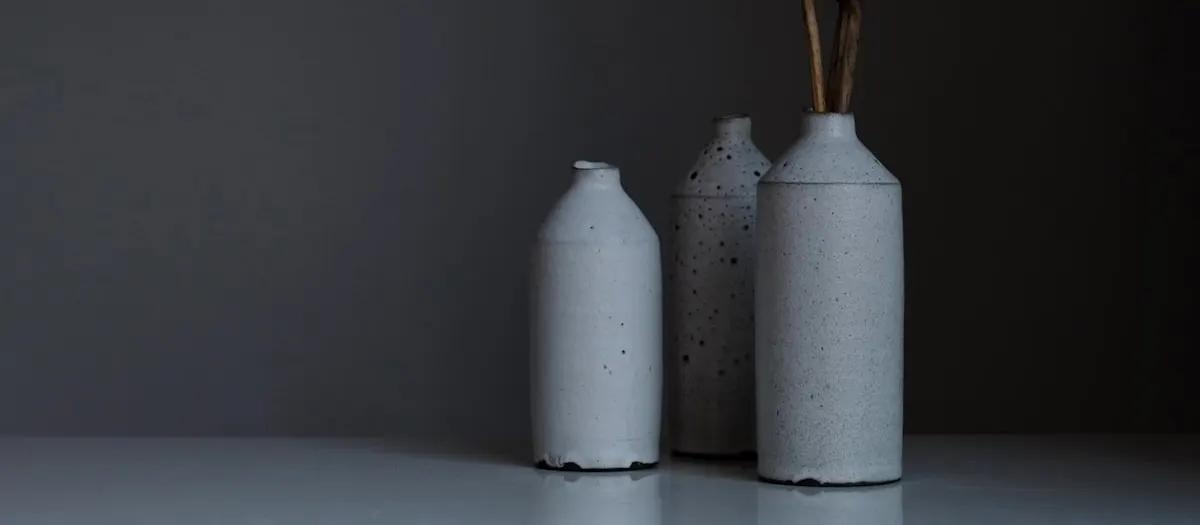
The Return of the Imperfect
Something is happening in the studios and the basements and the community ceramics wheels of cities across the world. People who spend their professional lives moving information — writing code, designing interfaces, generating documents, attending meetings — are coming home and making things with their hands.
They are throwing clay on wheels in converted warehouses. They are learning to bind books in evening classes that have waiting lists six months long. They are cutting dovetail joints in woodworking shops, learning to make bread with long cold ferments, stitching leather goods that will take years to break in. The revival of craft in the twenty-first century is one of those quiet cultural phenomena that looks, on first glance, like a lifestyle trend — the aesthetic of the artisanal, the Instagram aesthetic of the beautiful handmade — but which has, I think, a more serious interior.
A pot that took three days to make cannot be hurried. It holds its own time in its walls.
Against Undo
The fundamental experience of craft is irreversibility.
This sounds like a disadvantage, and in practical terms it often is. If you make a mistake in clay, on the wheel, in the first stages of throwing, you can recenter and begin again. But once the pot has dried to leather-hard, you cannot undo the decision you made about the lip. Once you have cut the wood, it is cut. Once the ink has gone into the paper, it is there.
A pot that took three days to make cannot be hurried.
This irreversibility is, I would argue, exactly what makes craft valuable as a counterweight to the digital world — a world where everything can be undone, where the edit is always available, where nothing need be committed to until the moment of publication and even then can be revised. The permanent availability of undo has changed something in how we inhabit decisions. The clay throws, the chisel cuts, the stitch sets: these are commitments, and the knowledge that they are commitments changes the quality of attention you bring to them.
The Body Knows
There is a form of knowledge that lives in the hands and cannot be fully expressed in language. This is what the philosopher Michael Polanyi called "tacit knowledge": we know more than we can tell. The experienced potter does not consciously calculate the pressure needed to open a ball of clay; the experienced woodworker does not consciously decide how to hold the plane. These knowledges are embodied, and they are acquired only through repetition, through failure, through the slow accumulation of physical experience.
This kind of knowledge is radically different from the knowledge acquired through reading or through screens. It is not information. It is capability — the body's registered understanding of how to do something. And it is, in the current epistemic environment, increasingly scarce. We are becoming very sophisticated at acquiring and processing information. We are becoming less practiced at acquiring embodied skill.
The revival of craft, I think, is partly a response to this imbalance. A reaching toward a kind of knowing that has no digital analogue.
What the Object Carries
When you make something well — not just adequately, but well — the object carries a residue of the attention you put into it. This is not mysticism. It is the visible trace of decision: the line of a pot's shoulder that reflects the maker's choice at a specific moment, the joint in a table that shows whether the maker was patient or hurried, the pages of a handbound book whose alignment tells you about the care with which the sections were sewn.
A friend of mine, a bookbinder in London, said something that has stayed with me: "The books I bind will outlast me. Someone will hold this in their hands in fifty years and I want them to be able to feel that it was made by someone who cared." This is not pretension. It is a different relationship with time than the digital world generally allows.
A pot that took three days to make cannot be hurried. It holds its own time in its walls.
The Slow Object in the Fast World
I am not arguing for a return to a pre-industrial economy of handcraft. The mass-produced object has its own virtues: accessibility, consistency, the democratization of good design. What I am arguing is that the handmade object offers something the mass-produced object cannot: a visible and tactile relationship with the human time and attention embedded in it.
In a world where most of what we consume arrives instantaneously — the streamed film, the digital book, the delivered meal — the object that carries the trace of its own making is a different kind of thing. It slows you down. It makes you aware of process, of time, of the fact that things require someone's presence to be made.
This awareness is not sentimental. It is, I think, part of what we are reaching for when we reach for the wheel, the bench, the sewing frame. Not nostalgia, but a recalibration. A way of being in time that is more like the clay than the screen.
“A pot that took three days to make cannot be hurried. It holds its own time in its walls.”
GRAIN Newsletter
Enjoying this essay?
Get the best of each issue — fortnightly, curated by the editors.