The Myth of the 24/7 City
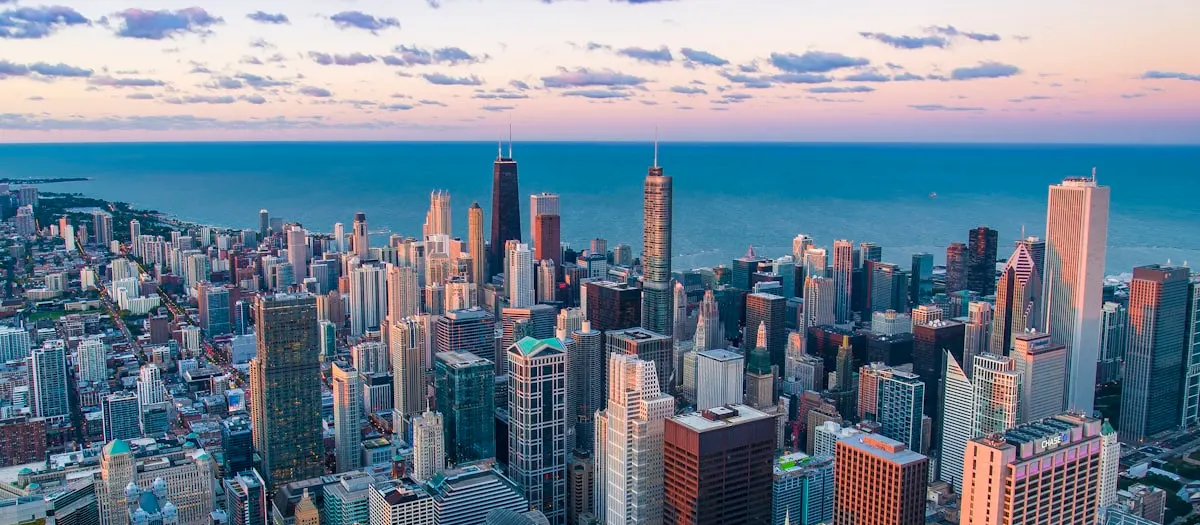
The phrase "the city that never sleeps" was coined for New York, which has been trading on it ever since, but the idea it names is something broader: a fantasy of urban life as continuous, always-available, humming with possibility at any hour. The 24/7 city. The city that does not ask you to stop.
It is largely a myth.
I have spent considerable time in the cities that claim this status — New York, London, Berlin, Tokyo — and what I have found is that the 24/7 city is a 24/7 city for some people in some neighborhoods at some times of the year. For others, the city shuts down in very predictable ways: the last subway at 12:30, the bar that closes because the landlord raised the rent, the late-night diner replaced by a juice bar. What looks like continuity from the outside is, from the inside, a constant negotiation between the desire for the city to be always open and the economic and social forces that keep closing it down.
The Last Decade of Nightlife
The years between 2010 and 2020 were, in most of the world's wealthy cities, a decade of nightlife collapse. The causes were multiple and interacting: rising rents displacing venues that had operated for decades on narrow margins; noise complaints from new residential towers built next to clubs that had been there first; licensing crackdowns responding to real but opportunistically amplified concerns about safety; and the slow migration of young people's social lives to their phones, which do not require a cover charge.
The city that never sleeps is a marketing slogan, not a description of how cities actually work. Every city sleeps. The question is who gets to sleep, and where, and on whose terms.
Berlin's techno scene — the most celebrated example of urban nightlife culture in the world — has been contracting steadily since the mid-2010s. Not dramatically, not all at once, but measurably: beloved clubs closing (Bar 25, Berghain's annexes, smaller venues across the Friedrichshain corridor), replaced sometimes by other clubs but more often by nothing, or by something that serves the new residents of Berlin's gentrified center rather than the people who built its night culture.
This is the standard story of gentrification applied to nocturnal space. It is a true story. But I want to complicate it slightly, because the loss of nightlife is not only an economic story — it is also a story about what cities are for and who gets to say.
The city that never sleeps is a marketing slogan. Every city sleeps.
Night as Commons
The night was, for most of modern urban history, one of the last genuinely heterogeneous social spaces. The bar, the club, the late-night diner — these were places where class and race and age mixed in ways they did not mix elsewhere. Not perfectly, not without conflict, but genuinely. The social mixing of nightlife was one of its functions: the city rehearsing, in the dark, the social arrangements it could not manage in daylight.
The loss of nightlife spaces is therefore not only a cultural loss — the closing of a beloved venue, the end of a scene — but a loss of a particular kind of social infrastructure. A place where different kinds of people encountered each other. A space outside the managed, curated, self-selected encounters of the digital world.
I am not romanticizing the night. The night is also where violence happens, where exploitation happens, where the vulnerability of intoxication is preyed upon. None of this is incidental. But the response to the risks of nocturnal public life cannot simply be to extinguish it.
The Quiet That Followed
I reported from Detroit during the pandemic years, and then from the years after, when the city was attempting to articulate a recovery that was both economic and cultural. What struck me most was the quality of the silence in neighborhoods where the bars had not reopened. Not a peaceful silence. A hollow one.
There is a sociological concept called "third places" — associated with Ray Oldenburg's work — that describes the spaces that are neither home nor work: the café, the barbershop, the bar, the park bench where you sit for an hour every evening. These places are, Oldenburg argues, essential to the fabric of community life. They are where local identity is formed and maintained, where gossip circulates, where people encounter the social world outside their intimate circle.
When these places close, communities do not simply lose a venue. They lose the infrastructure of encounter. The result is not neat and private, two-by-two coupledom in a well-appointed apartment, which has its pleasures, but it is thin in a way that becomes apparent only over time: the slow attenuation of the unexpected, the accidental, the social encounter that was not planned.
Who Stays Up
Walk any major city after midnight. What you find is instructive. The streets are not empty — they are just different. The people out at 2 a.m. are not the people who are out at 9 p.m. They are workers: the people cleaning buildings, stocking shelves, driving the cars that ferry the late-shift arrivals home. They are the security guards and the kitchen porters and the delivery riders. The 24/7 city, for these people, is not a fantasy but a fact. They are always working in it.
The nightlife collapse, then, is partly a collapse of the spaces where the late-working and the late-playing coexisted. The diner at 3 a.m. is where the club kid and the janitor are both just people who need coffee. When the diner closes, each returns to their separate world.
What cities are losing, I think, is not nightlife as spectacle but nightlife as social infrastructure. The texture of the urban night — its mix, its risk, its accidental encounters, its hours where ordinary social hierarchies are suspended — is something that took decades to build and can be demolished in a single property cycle.
Whether cities will choose to protect it — through licensing policies, rent stabilizations, dedicated cultural infrastructure funds, or something not yet invented — is one of the more interesting questions in contemporary urban policy. Most cities, at present, are choosing not to.
The night, which belongs to everyone, keeps being sold.
“The city that never sleeps is a marketing slogan, not a description of how cities actually work. Every city sleeps. The question is who gets to sleep, and where, and on whose terms.”
GRAIN Newsletter
Enjoying this essay?
Get the best of each issue — fortnightly, curated by the editors.